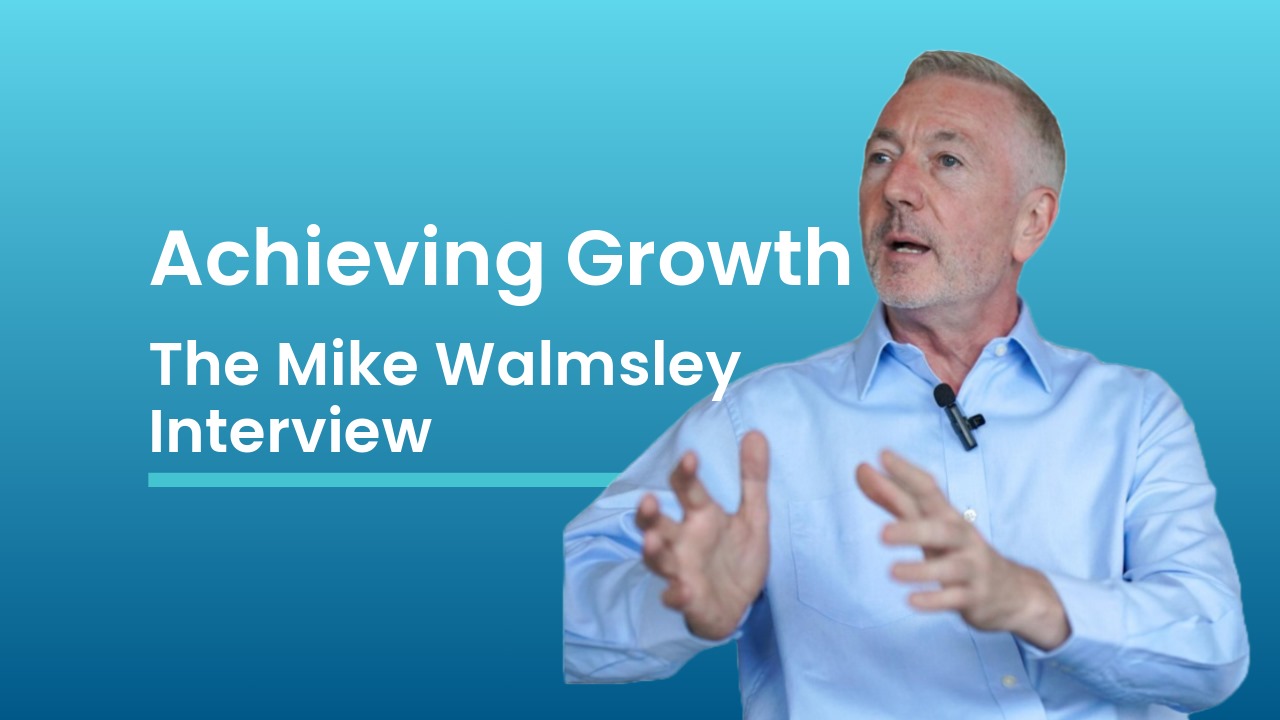

Mike Walmsley has been a thought leader in the recruitment industry for over 20 years.
In this one-to-one interview with writer, Edward Cornes, Mike shares his experiences candidly and provides some very powerful takeaways for anyone working in the recruitment industry
Edward Cornes:
Can you provide some insights into your role, your evolution, how you’ve got where you are today? What made you want to set up SuperBiller.com and RecruitmentTraining.com?
Mike Walmsley:
Sure. Well, I had a very successful career in recruitment. I was a £million biller personally in the London market. I built cold desks on four different occasions, three times in permanent recruitment and once in contract recruitment. All became extremely successful. And then I became MD of a fast growth recruitment company and we grew that from 3 to over 100 people. We opened in London, Edinburgh, Dublin, Sydney, Melbourne, Auckland, Wellington, Christchurch and Bangkok.
We sold the business off in various stages. I was a relatively young guy with a bit of money in the bank following the exit and I thought, “what do I do next?” At that time my recruitment company used to use some American recruitment training videos as part of our internal training.
We’d learned in that company that you’ve got to continually develop people, refine, improve, refine, role play, improve, improve. I was a massive believer in hiring young people, train them hard, have superb internal hiring, high barriers to entry and only people of the highest calibre get through that door. Then induct them extremely well, fast track them to bill quickly and away you go. And it worked in a big way. So I knew the value of that training. I didn’t delegate the training at first, I did it myself. Even as MD I always kept my hand in and ran training sessions as the company grew. I put ongoing development into the DNA of the business. I debunked this ridiculous myth of “I’ve been trained”. It’s total nonsense, by the way. Getting to the top is a journey to mastery. If you’re trained on, I don’t know, candidate referrals, then are you as good as me after one training session? Probably not. So it’s a journey to mastery. You might rate yourself 4 out of ten, get yourself to 5, to 6, to 7 out of 10 and beyond in every aspect of the job.
So after the exit, I’m sat with some money in the bank thinking, what’s my next play? And I thought, you know what? I am pretty good at recruitment. So I’m going to create some training videos, and I’ll be the first British presenter. And there were no British presenters at the time on video.
So I engaged a BaftA. Award winning BBC producer, networked into him. He got a BaftA for interactive digital Wimbledon back in the day, and produced that old classic, Top Of The Pops. Plus a number of other major BBC productions. And I learned a lot from him in terms of presenting to camera, using inclusive language to get your point across in a way where people think, yeah, I see that. Rather than, “I don’t agree with that”
We cut six recruitment training DVDs and sold them all around the world. And believe it or not, we sold one DVD at the time for £699, or a set of six training DVDs for £2,999. You got a discount if you bought all six. We sold truckloads of them all around the world. And on the back of that, I got invited to speak at recruitment trade associations such as NAPS in San Diego, ACSESS in Canada, APSO in South Africa, the RCSA in Australia, REC and APSCo in the UK, widely throughout the UK and Europe, Singapore and other places. I became an expert recruitment speaker at these kind of big events, and it built from there. Following that, I came up with another idea, which was recruitment-specific peer-to-peer learning for the recruitment industry.
So when we sold Parker Bridge, which was the company I was MD of for a while, we made a good exit, but I had made some mistakes. Everyone does in business. And I looked back on some of those and thought, you know, I didn’t have an advisor, and maybe I should have done. So I built the world’s first peer-to-peer learning entity for the recruitment industry called Elite Leaders and it grew like crazy. A few years later we sold that and now peer-to-peer sessions in recruitment are quite mainstream. There weren’t many recruitment-specific board advisors back then and now there’s quite a few and that’s also common. But I was the pioneer of some of those things back in the day. Now you’ve got The Recruitment Network, which was a spinoff from Elite, by the way and you’ve got Gary Goldsmith’s Pirates, which is also of a copy of the peer-to-peer principle, in a different way. And you’ve got the Captain’s Table in Australia.
So that was my journey. And I worked with 300 recruitment CEOs during that growth phase. Fast forward to now I jointly own SuperBiller.com and RecruitmentTraining.com. The original six training videos are obviously obsolete now with old material, even though some of it is still relevant today. So we canned all the old DVDs and we now have 820 recruiter videos online with some unique new interactive content for experienced recruiters. You can also subscribe to our Learning Management System software, add your own content to it and build a robust learning and development infrastructure that’s totally tailored to your business. So, a long answer to your question, but that’s my journey.
Edward Cornes:
“Million dollar biller”? Is that literally a single person bringing in a million dollars of business in one year for a company?
Mike Walmsley:
Yes.
Edward Cornes:
And as a 360 recruiter, that’s the type of role that you’re talking about? So can 180 recruiters bill big?
Mike Walmsley:
Yes. There are people who do 180 roles and bill big. For the biggest biller I’ve come across, I was actually a board advisor to his business, he billed £2.25 million in one year on his own. Now that’s about £8 million turnover. But he had a delivery team. He would be the business winner. He’d fill some roles, absolutely, he was a very conscientious, totally professional, driven individual and he wanted the best for his clients. But he had a delivery team who would source the candidates. And you can bill more sometimes with that model because you’re a little bit more freed up, but you do lose a few things because, and a lot of people don’t realise this, a lot of business opportunities come from discussions with candidates.
And if you’re not talking to candidates as a 180 business winner, then you’re missing out on so much.
Edward Cornes:
Okay. I feel like I’ve interviewed around 30 or so people recently. And a lot of people, they’ve looked down on this whole competitive, ruthless, Wolf of Wall Street style of recruitment. I don’t really know much about it because most of the people I’ve spoken to, I wouldn’t say it’s a different model, but they’re running their business a very different way to. The way that probably doesn’t even allow for people to become million dollar billers, as you say.
Mike Walmsley:
Give me a recruitment business with 100 people doing £150,000 to £200,000 a year each. That’s an easier business to manage and sell. But you’re always going to get half a dozen people in a team of 100 who are superstars, who can do a hell of a lot more than £150,000. You need to manage these people extremely well, keep them inspired and hungry. Give them a clear career path. Lock them in with LTIPs, share options or equity incentives – because otherwise they’ll go and set up on their own. They’ll know their value, obviously. But I don’t think it was ever Wolf of Wall Street, to be honest. Back then recruitment was probably a little bit more, what’s the word? A little bit more fun. Maybe that’s because I was a young guy and there would be a little bit of more banter in the office but when I got very good at this job, you could hardly talk to me. You know, I’d come in the morning and I’d be on the phone immediately, and then 7pm, leave the office, go for a drink with a client after work.
“Ed, do you fancy joining me for a drink after work with this client? Oh, you’re off home. Okay. See you tomorrow.” Gone. The incredible focus of a peak performer is hugely different than someone who’s just billing average amounts. And I think once I kicked in to earning big money, once I realised the earning potential and how it could improve my future, I changed. Whereas when I was relatively new to recruitment, I was a bit of a clown, to be honest. I like to make people laugh.
I remember one day my colleagues had a meeting in a boardroom.The manager wasn’t there. I knocked on the meeting room door. I got down on my knees, my head came in sideways from the floor, and when I opened the door they couldn’t see me. And then they saw me at the bottom of the door, and all started laughing. I did stupid, immature things like that, but it was fun. It was immature but it wasn’t really unprofessional. The dealings with the candidates and clients were highly professional. So, it wasn’t like Wolf of Wall Street – that implies cheating, doesn’t it? It wasn’t cheating. I did experience some underhanded tactics though back then. One company I worked for, before Parker Bridge, my manager said to me, “Mike, can you go and register with another recruitment company and pretend you are a candidate and then get information from them?” That was my manager telling me to do that!!!
So I did it, and I came back and I thought, “You’re better than that, Mike.” And I left the company. And that was one of the reasons why. That was immaturity on behalf of my manager. Maybe she didn’t know how to win more business rather than using underhanded tactics. So, if you fast forward to recruitment today, it’s professional selling at the highest level. And the ability to get into a conversation with a candidate or a client that other people can’t is a skill. And of course, social media exposes pretty much everything now. So any recruiter that is foolish enough to use underhanded tactics is going to get exposed at some point.
Edward Cornes:
You said there is always going to be that 10% of people who absolutely excel over others. What do you think those 90% are doing wrong? Is it purely the focus?
Mike Walmsley:
It’s a great question. Part of it is attitude. Yeah, there’s like a stubborn determination to be the best. Stubborn is normally is a negative word, but not in this sense. My mentality was, you can’t outwork me and you can’t outsmart me. This work life balance thing goes over my head, although I understand it. Everyone wants to have a nice life, and I do too. But I see it as work- life-integration, not work-life-balance. With work-life-integration I could be on a beach and still answer a question from a candidate or a client and deal with it on my smartphone. But some people have got this “I’ll switch off” attitude. Others are relentless. I think there’s also no fear of failure in the top 10%, they embrace failure and learn from it. Maybe for me, it was also a bit of naivety. Back in the day. I knew no different, so I just did it.
Part of any successful recruiter’s journey is being steered in the right direction. So one of the best bits of advice I got was from an old boss of mine, and he said, “Mike, I don’t want to see you in the office.” And I smiled at him, and I thought, “he wants me to go and see prospect clients”. And that’s what I did. So I was out of the office a lot of the time. I was networking. You asked me, what do these people do differently? I’ll give you an example. Recruiter A goes on a client meeting, comes back to the office. The manager says, “How’d you get on?” “Built a good relationship.” Recruiter B goes on, the same meeting, comes back. “How’d you get on?” “I’ve closed him to work with me exclusively the next time he hires. And I’ve sent an email, I’ll show you: “Dear John, thanks for your time earlier today. I’m delighted that you’ll be working with me exclusively the next time you hire. Should you wish to discuss any other areas that I can help you inject costs and time savings into your hiring strategy, feel free to ring me on this number at any time”. And then being organised enough to follow up.
So a few weeks later, I’m back on the phone to my new client.
“Hey, Dave, good to catch up with you. Appreciate you not hiring. Oh, by the way, Dave, many thanks once again for your commitment to work with me exclusively. I presume you’re still comfortable with that. -Yes, I am.”
Email goes out.
“Dear Dave, great to catch up with you again today, as discussed. Many thanks once again for your commitment to work with me exclusively the next time you hire. Blah, blah.”
So there’s this sales process, and a lot of people don’t have a sales process and they’re not closers. So I think part of that goes back to training and onboarding. I was with a recruitment company recently, helping them to create an onboarding process. And on day one, they’re training them on their CRM. And I’m thinking, no, don’t do that!! Why are you training a salesperson how to use the CRM on day one? Up-skill them in the best sales techniques or if they are a rookie, train them how to sell.
Role play with them. Give them the best recruitment sales techniques as well as the core principles of selling. Teach them open questioning the danger of closed questions, leading questions, affirmative questions, objection handling. Teach them classically how to sell. Improve their flow of language and their ability to control conversations, not on how to use your CRM on day one! Set the tone correctly. So in my business, and the great success we had in it, that’s what we did. If you think about it makes perfect sense. If it’s a two week induction for a rookie and into the second week, you start training them how to sell. And they say, “Mike, can I just have a word? I don’t think this job’s for me. I didn’t realise it was this much selling”. You know what I mean? I’ve seen that happen. So you’ve got to drum sales into people early.
It’s a sales job. Everything is selling in this job, 180 recruiters who only speak to candidates, they sell to candidates. 120 recruiters, they sell to candidates. Even if you’re sending an electronic message, an email, WhatsApp or LinkedIn message to a candidate, it’s the clever way that you construct the message that gives you a greater return for the time that you spend – and that involves an understanding of selling. So I think those are some of the reasons why the top 10% are better than others. But clearly, you’ve got to be made of the right stuff. Attitude is, number one, the hunger, the determination, and also only hire people of the highest calibre. Say “no” to the people who are good but not quite good enough for you. For me, I’m not bothered what a person’s done in their life before working for me. In fact, one of my best hires used to turn hospital beds!
She got pregnant when she was 17, she had four children by the time she was 29 and she was working in an old people’s home turning hospital beds. She was absolutely phenomenal. Yeah, her life until that point had taken her down a certain pathway, but I looked deeper than that. Leaders should always be looking out for top talent. You could meet someone at a bus stop, get talking to them, meet them in a bar, and they’re a recruiter inside. And by the way, I’m giving you a little clue as to how you attract talent in your business. It’s proactive. So a great hire I had was whilst in a bar waiting for a friend of mine. The guy serving me was a Kiwi, and was in London where we placed Aussies and Kiwis and South Africans in the London market.
So I knew the difference between an Australian accent and a New Zealand accent. I said, “Are you from Auckland? He said, good on you. Most people think I’m Australian. I said, “How long have you been here?” “A couple of weeks.” “Right. What do you do back home?” “I work in sales.” A couple of weeks later, he’s wearing a smart suit, which I paid for. I bought him a suit, he didn’t even have a suit. And a couple of weeks later he’s working for me. That is a skill that isn’t utilised by many managers and directors. So, directors of businesses, if you want to hire potential £million billers, $million billers, you’ve got to be very proactive.
Sir Alex Ferguson, in his book Leading, which is a fantastic management book, said, ‘the best talent doesn’t stand cap in hand outside your door asking for a job’. And that applies not just to the job of a recruiter who is headhunting, it applies to hiring your own staff. To get these bigger billers, you have to find sharper people, because a 7 out of 10 calibre person doesn’t give you 70% performance versus someone who’s near perfect. No, the 7/10, they give you problems. They struggle to work out things for themselves, and they soak up management time. When you’re hiring internally, it’s easy to be fooled. It’s easy to think, I’ll hire that person, I’ll give them a chance. Whereas the correct decision is the pain of saying no. And the reason it’s pain is because you’ve personally still got a problem. You’ve now got to interview someone else and that takes an hour. And then somebody else and somebody else.
So we interviewed hundreds of people in that growth phase. We hired a lot, but we turned down for more and I think those are some of the ingredients of building a great recruitment business.
Edward Cornes:
So it’s those spontaneous connections. Sometimes that can be the most fruitful ones that you find. I want to ask a bit more about actual client acquisition and those sort of strategies.
What do you think that this whole personal brand trend? I don’t know if it’s a trend or whether it’s going to be the most important factor in the future. Do you think this whole trend of personal branding, creating content, is essential for the growth of a recruitment company nowadays?
Mike Walmsley:
Absolutely. I’ve created a course of twelve modules training people how to do it. I do it every day myself.
Edward Cornes:
Your LinkedIn content is quite captivating.
Mike Walmsley:
Thank you. I do it pretty much every day. The number one question I get about this is, “Hey Mike, how do you never run out of ideas?” That’s a skill. That’s a skill and it’s trainable. So we train recruiters how to never run out of ideas for posts. It’s simple actually. However, you can’t be a one trick pony.
Edward Cornes:
I read something about a one trick pony. I don’t know if it was today or yesterday that you posted that.
Mike Walmsley:
Yeah, well the one I did today was about ‘don’t be a dinosaur’. Don’t listen to dinosaurs who tell you that telephone sales doesn’t work and that all your prospecting has to be via LinkedIn or email. Don’t listen to dinosaurs who tell you that you cannot get through to decision makers by phone. Personal branding and social selling can help you get into conversations, but the best recruiters are also constantly on the phone or meeting clients and prospect clients.
I’m going to go into some other elements now. The thing is, if it was your own business as a recruiter, you wouldn’t just rely one thing and then blame the market, “Oh, there’s no business coming in” because if you do that you go bust and there’s no food on the table. So the correct approach for me is a blend of business development tactics.
So you should use the best outbound strategies and the best inbound marketing strategies that you can afford, and of course social selling is free, just bit of time and reasonable writing skills. But you also need the best telephone sales strategies. People often talk about cold calling. Well, I made hundreds and hundreds of calls, but my calls were based around warm calling.
So, if I were to just pitch you cold, as a new client Ed, a lot of prospects will push you away when they feel it’s a sales call. But if I were to call you about a previous employee. Ring, ring. “Hello, Ed. It’s Mike Walmsley from X here. I’m calling to ask for your help in regard to John Smith, who used to work for you.” That’s one warm calling technique – i.e. take a verbal reference to get into a decision maker conversation. Now, the skill level to convert that conversation into new business is quite involved, but it’s easily trainable. The recruiter who just says, “Was he any good? Then moves onto, “give me your business”, Ed, they’re going to fail.
The recruiter who knows how to take a verbal reference with the utmost professionalism and to then bridge the conversation it into a professional business discussion and to then close for a client meeting, even though the customer is saying, I’m happy with my current suppliers, all my recruitment goes through HR or whatever else the objection might be. That’s the skill. That’s the skill there. But the mechanism to get into the call is easy. So that’s one.
There are a number of them. And then the question is, why would a recruiter only use one approach to win business? i.e. social selling, and then sit back and blame the market? “Yeah, I’m doing social selling. There’s no business coming in”. You got to have the right blend and take ownership of it as a business winner.
I’m going to do a live stream soon with a guy from the US called Jayce. Jayce did a LinkedIn post the other day. He runs a recruitment company. He said he’s been using all kinds of strategies. LinkedIn Marketing, PPC on Facebook, PPC on LinkedIn, email. He said last month he got 85 appointments. And 83% of those appointments were from cold calling.
And the post I did today is actually about that. It’s about that conversation I had with him. In that post, I talk about ‘the voice’. Jayce has ‘the voice’. When you speak to him, it’s warm, it’s friendly, it’s professional, it’s non pushy, it’s non-threatening. My son, who’s 23, lives in Australia now, and he’s got the voice. He got a telesales job in Australia for his first job after graduating. He became number 1 in the world out of, I think, over 300 telesales operatives within a few months. I’ve never coached him, by the way. I just let him follow his own pathway. I’ve never even talked to him about getting into recruitment or sales. I was surprised when he pitched me out of the blue one day to practice his new cells skills – just pitched me company’s service. And I’m listening to this thinking, “is that my son?”
Because obviously, I’ve never heard him doing it in that professional manner. I’m thinking, what a voice. It’s like a violin. So you’ve got to have the voice. And the voice comes from practice, the voice comes from role play. Within the training we did back at my old company, a lot of it was role play based. Let people make mistakes. I did a role play once with someone that we filmed on an iPhone. It was a dummy client meeting, and it lasted about 30 minutes. Then we played it back. And the person doing the role play with me, who was acting the part of the recruiter, watched it back with me, he used the word ‘obviously’ 17 times. 17 times!
Imagine if you’re that client. You’re on the client meeting hearing: obviously. And obviously. And obviously. He didn’t realise he was doing it. My point is, he needed feedback and were able to refine that out of him. He never did it again, by the way. So telesales is an art. There’s a real skill to it, but you’ve got to learn it and you got to master it. And like anything else, like public speaking, which many people fear, it can be mastered. I’ll stand up in front of 200 or 300 people and do a speech with no script. My father passed away a couple of years ago. I did the eulogy without a script. I don’t need it because I know how to command an audience. But I learned that. I learned how to do that. I read books on professional speech writing. I practised in front of a mirror. I was coached by a TV producer who produced old classics like Tomorrow’s World, Top of The Pops, Horizon. I learned.
I understand the fear of public speaking, it’s not the easiest thing in the world to do when you’ve never done it before. Well maybe telesales is a little bit like that. It’s like you’ve got to practice it, you got to role play it and get some feedback. So when I’m coaching or training recruiters, I talk about the importance of ‘the food of champions’. The food of champions is feedback. If you can’t take feedback, you’re probably not going to reach the top in recruitment.
Edward Cornes:
Yes, I recorded my sales call yesterday and I was playing it back and I could barely even stand watching it back. The hairs on the back of my neck were freaking up at things I was saying. I had no idea that I actually swore twice in this sales call speaking to this person. I didn’t even realise I did it at the time.
Mike Walmsley:
Well that’s good. All credit to you for doing that. It’s very commendable that you’ve done that. It shows high emotional intelligence and that’s exactly what you should do. Listen to your calls and be hard on yourself, you’ll probably never make a call like that again now. So I think that’s great.
Edward Cornes:
Hopefully not. I have one open ended question. At the moment I’m helping a few clients land business with companies that have maybe 2000 employees they’re turning over millions. But when it comes to these bigger companies, 100+ employees, making tens of millions a year, I feel like the way of doing business has to be completely different. The way you construct a pitch has to be different. The way you do introductions, it doesn’t work the same. How would you go about supporting a recruitment company, doing business with giants?
Mike Walmsley:
There’s often a PSL process, and that can include a tender. I’ve done many of them. I did the Goldman Sachs tender years back and I spent something like 8 hours in the office locked in my room with no lunch break and just coffee. And I ploughed through that and it got to the end of the day and I thought I’ll finish it over the weekend. I said to my wife at the time, right, I’m just going to finish off this tender. 8 hours later, I’m still on it. So there’s sometimes quite a significant amounts of expertise needed to get on the list for these bigger organizations. But on the other hand, you can get on some smaller company PSLs after one meeting.
But the thing I also teach with the bigger accounts is, do you even want to be on some of those PSLs?
Because you can go through all these time-consuming processes only to find it’s a complete waste of time. I’ve done it. We got on the Citi PSL years ago and it was a nightmare. We ultimately withdrew. We were employing highly skilled recruiters who we paid good money but ending up sending CVs into a black hole and never getting any feedback. And then even worse, the client tells you off, they want a monthly report which, of course, you’re not getting paid for.
You send a report to them and you’ve sent 15 CVs or 20 and you’ve got two interviews and then they want to have a meeting to escalate the fact you’ve only got two interviews from 15 or 20. But they only gave you a three line job spec that nobody can work from with any degree of accuracy. And they block you from speaking to line managers.
Be careful what you wish for. It might sound good to on that PSL but maybe it’s not. Maybe it’s better. like we ended up doing, just to headhunt their staff and to use them as a ‘source client’ and never recruit for them. Sometimes that’s the correct course of action. But, yeah, so you’ve got these big tenders and ‘beauty parades’ of you and other recruiters chasing the PSL Holy Grail, and if you want to go higher scale and do an RPO, it’s quite serious stuff. It’s beyond the scope of this conversation to go into depth about that but, in actual fact, one of the presenters we filmed for RecruitmentTraining.com, set up Reed’s RPO from scratch. I think he achieved something like 25% year on year growth for five years in a row, maybe more than that, actually.
And then he was headhunted by Korn Ferry and he set up their RPO and did the same for them. He was planning to be an advisor to the industry, explaining how you could set up RPOs. So we filmed him and we got approval for the footage. And then he changed his mind and got a job back in recruitment as an MD.
So we got absolute gold from him as to exactly how you set up an RPO, what’s involved, how buyers think when making these decisions, how to make additional money, not just from placing people and making fees, and how to construct the right deal. A whole range of stuff that he’d been doing for ten years. We’ve got that in our offering now at RecruitmentTraining.com.
Edward Cornes:
I ask a question and there’s just so much information. I’m trying to write everything down, so stunned. Do you do consultations for stuff like this?
Mike Walmsley:
I’ve done quite a lot of board advisory work, Ed. I’ve helped three recruitment companies to exit for £Multimillions. I was chairman of the board and their confidant. Sometimes a director would call me at 7pm at night. I’d have a chat with them about a problem or an issue. I helped them to structure board meetings, chair the board meeting, give them advice, bring new ideas to the business that they’ve not considered before. So I’ve got huge experience in that arena. Yeah, I do.
To find out more about Mike Walmsley’s board advisory services click here